Skip to content
Your partner in software, systems & digital innovation.
EXPLORE GROXEL
FIND YOUR WAY AROUND GROXEL

What are you looking for?

Search services, projects, insights, people, learning, research, and resources.

Start with a word or a question.

Try a service, project, research topic, course, or team member.

HOME/ NEWS & UPDATES

Fresh thinking.
A connected perspective.

Technology news, new possibilities, and ideas to keep you moving forward.

Results for “research”2 articles

Clear filters
Technology

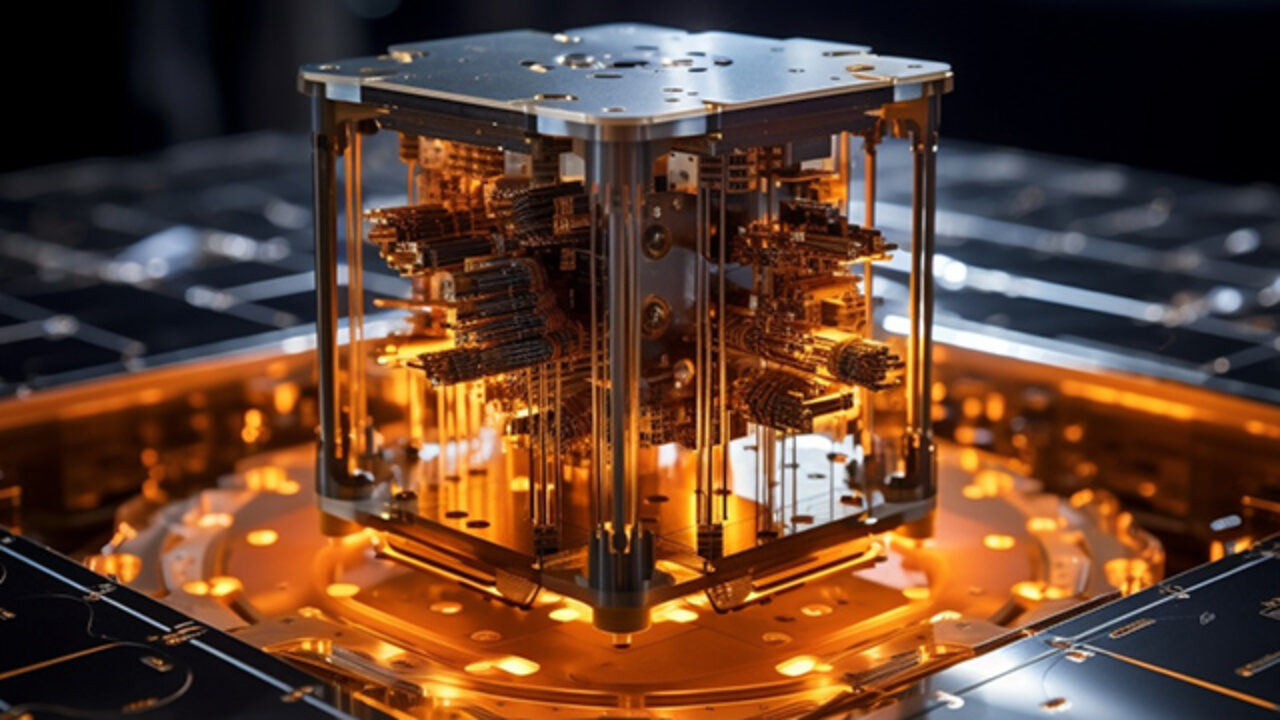
The Quantum Leap: How Quantum Computing Could Revolutionize Our World

While Artificial Intelligence (AI) dominates tech headlines, another revolution is brewing in the realm of physics: Quantum Computing. This mind-bending technology harnesses the bizarre rules of the quantum world to perform calculations exponentially faster than traditional computers.Imagine a computer that can crack complex encryption codes in seconds, or design lifesaving drugs in mere hours. That's the promise of quantum computing, a potential game-changer across numerous industries. Here's a glimpse into how this technology could transform our future:Unbreakable Encryption: Our current encryption methods rely on complex mathematical problems that are difficult for traditional computers to crack. However, quantum computers could solve these problems with ease, potentially jeopardizing online security and financial transactions. This necessitates developing new, quantum-resistant encryption methods .Medical Marvels: Simulating complex molecules is a monumental task for traditional computers. Quantum computers, however, could model the behavior of molecules at an atomic level, leading to breakthroughs in drug discovery and personalized medicine . Imagine designing customized drugs that target specific genetic mutations in individual patients.Materials Science Revolution: Quantum computers could revolutionize materials science by simulating the properties of materials at a fundamental level. This could lead to the development of entirely new materials with unprecedented properties - superconductors that operate at room temperature, or ultra-lightweight alloys for next-generation aircraft.Financial Forecasting on Steroids: Financial markets are complex beasts driven by a multitude of factors. Quantum computers could analyze vast amounts of financial data and identify patterns that traditional computers might miss, leading to more accurate forecasting and risk management .However, quantum computing is still in its nascent stages. Building these machines is a complex and expensive endeavor. Here are some of the challenges we need to overcome:Quantum Supremacy: Achieving "quantum supremacy," the point where a quantum computer can outperform a traditional computer for specific tasks, remains a scientific hurdle.Error Correction: Quantum bits (qubits), the building blocks of quantum computers, are highly susceptible to errors . Developing error correction methods is critical for reliable quantum computing.Scalability: Building large-scale quantum computers is a significant technological challenge. Researchers are exploring various approaches to scale up quantum computing power.The path to harnessing the true potential of quantum computing is long and arduous. But the potential rewards are immense. By overcoming these challenges, we can unlock a future where quantum computers tackle problems that are currently beyond our reach, ushering in a new era of scientific and technological advancement.
Technology

The Rise of Quantum Computing: Revolutionizing Technology

In recent years, quantum computing has emerged as one of the most promising fields in technology. With the potential to solve complex problems that are currently beyond the reach of classical computers, quantum computing is set to revolutionize various industries, from cryptography to artificial intelligence.What is Quantum Computing?Quantum computing leverages the principles of quantum mechanics to process information in fundamentally different ways than classical computers. While classical computers use bits to represent data as 0s and 1s, quantum computers use quantum bits, or qubits. Qubits can exist in multiple states simultaneously, thanks to a phenomenon known as superposition. This enables quantum computers to perform multiple calculations at once, significantly speeding up problem-solving.Another critical principle of quantum mechanics, entanglement, allows qubits that are entangled to influence each other instantly, regardless of the distance separating them. This property can be harnessed to create powerful quantum algorithms that outperform their classical counterparts in specific tasks.Applications of Quantum ComputingQuantum computing holds the promise of transforming numerous fields:Cryptography: Quantum computers could break current encryption methods, leading to the development of new, more secure encryption techniques. Quantum key distribution (QKD) is an emerging technology that offers theoretically unbreakable encryption.Drug Discovery: Quantum computing can simulate molecular interactions at an unprecedented level of detail, accelerating the discovery of new drugs and materials. This could lead to significant breakthroughs in medicine and materials science.Optimization Problems: Many industries face complex optimization problems, such as route planning for logistics companies or portfolio optimization in finance. Quantum algorithms can solve these problems more efficiently than classical methods.Artificial Intelligence: Quantum computing can enhance machine learning algorithms, making AI systems faster and more accurate. This could lead to advances in natural language processing, image recognition, and other AI applications.Image Source: AI and Quantum Computing IntegrationChallenges and Future OutlookDespite its potential, quantum computing is still in its early stages. Building and maintaining stable qubits is a significant technical challenge, as they are highly susceptible to environmental disturbances. Researchers are working on various approaches to mitigate these issues, such as error-correcting codes and improved qubit designs.